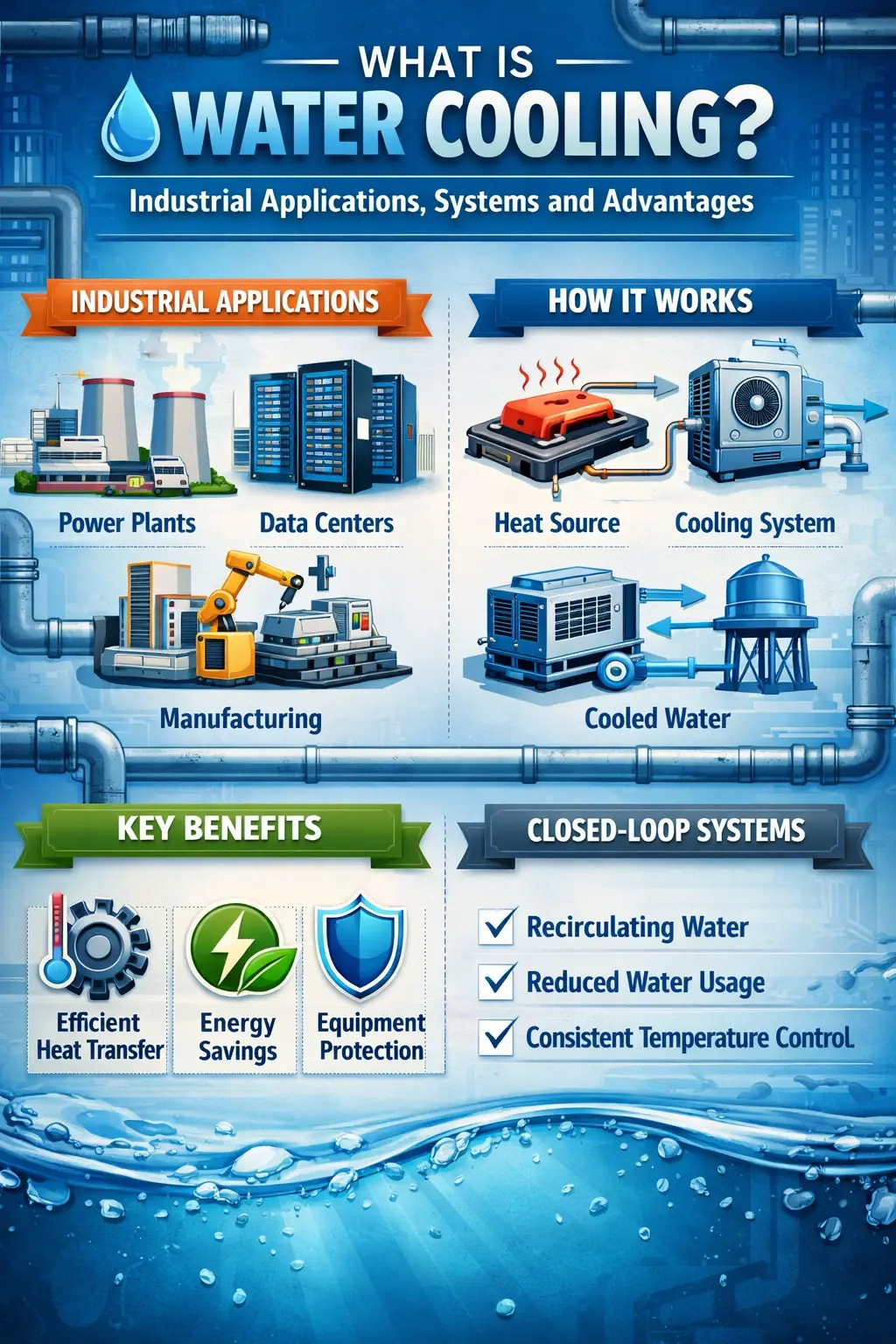
Water cooling is one of the most efficient and widely used methods for removing heat from systems, equipment, and industrial processes. In many sectors where temperature control is critical, water serves as an excellent medium for heat transfer due to its high thermal capacity, availability, and cost efficiency. Compared with air cooling, water cooling systems can absorb and transport significantly more heat, which makes them indispensable in industries such as manufacturing, power generation, food processing, data centers, chemical plants, HVAC systems, and refrigeration technologies.
The basic principle of water cooling relies on the ability of water to absorb heat from a source and carry it away to another location where the heat can be dissipated. When water flows through or around a heated component, it absorbs thermal energy from the surface. This heated water is then transported through pipes or channels to a heat exchanger, cooling tower, chiller, or another cooling device where the heat is released. After releasing the heat, the cooled water can be recirculated back into the system to repeat the process.
One of the most common applications of water cooling can be found in industrial machinery and manufacturing processes. Heavy equipment, compressors, hydraulic systems, injection molding machines, and large-scale production lines generate significant amounts of heat during operation. Excessive heat can reduce performance, shorten equipment lifespan, and increase the risk of mechanical failure. Water cooling systems help maintain stable operating temperatures, ensuring consistent performance and reliability. By controlling temperature fluctuations, companies can protect their machinery and reduce maintenance costs.
Water cooling is also a fundamental technology in power plants and energy production facilities. Thermal power stations, nuclear plants, and many renewable energy systems depend on water cooling to manage heat generated during energy conversion processes. Steam turbines, condensers, and generators require efficient heat removal to operate safely and efficiently. Large volumes of water are circulated through cooling circuits, often supported by cooling towers or natural water sources such as rivers, lakes, or seawater.
Another major field where water cooling plays a crucial role is the HVAC industry. Heating, ventilation, and air conditioning systems in large buildings frequently rely on chilled water systems. In these systems, water is cooled by industrial chillers and then circulated through air handling units or fan coil units to absorb heat from indoor environments. The warmed water returns to the chiller where it is cooled again, forming a continuous loop that maintains comfortable indoor temperatures in office buildings, shopping malls, hospitals, and airports.
The rapid expansion of digital infrastructure has also increased the importance of water cooling technologies. Data centers house thousands of servers that generate large amounts of heat during continuous operation. Maintaining optimal temperature conditions is essential to prevent hardware damage and ensure uninterrupted performance. Advanced water cooling systems are increasingly used in modern data centers because they can remove heat more efficiently than traditional air cooling methods while consuming less energy.
In the food and beverage industry, water cooling systems support various stages of production and preservation. Many processes require precise temperature control to maintain product quality, safety, and shelf life. Water cooling is commonly used in dairy processing, beverage production, seafood processing, ice manufacturing, and cold storage facilities. Chilled water helps stabilize temperatures during processing, packaging, and storage while ensuring compliance with strict food safety regulations.
Chemical and pharmaceutical industries also rely heavily on water cooling. Many chemical reactions generate significant heat that must be controlled to maintain safe operating conditions and prevent unwanted side reactions. Cooling systems help regulate reactor temperatures, condense vapors, and stabilize sensitive materials. Reliable temperature control is especially important in pharmaceutical production where even small deviations can affect product quality and compliance standards.
Water cooling systems can operate in several different configurations depending on the application. Open-loop systems use water from natural sources such as rivers or lakes and discharge it after use. Closed-loop systems, on the other hand, circulate the same water repeatedly within a sealed network of pipes and heat exchangers. Closed-loop designs are often preferred because they reduce water consumption, minimize contamination, and provide more consistent temperature control.
Modern water cooling systems frequently incorporate advanced technologies such as industrial chillers, cooling towers, plate heat exchangers, pumps, automated control systems, and monitoring sensors. These components work together to optimize energy efficiency and maintain precise thermal management. Intelligent control systems can monitor temperature, pressure, and flow rates in real time, allowing operators to adjust performance and detect potential issues before they become serious problems.
Energy efficiency is a major advantage of water cooling compared with many alternative cooling methods. Because water has a much higher heat transfer capability than air, systems can operate with lower energy consumption while still achieving effective cooling. This makes water cooling particularly attractive for large-scale industrial applications where energy costs and environmental impact are important considerations.
Environmental sustainability is also influencing the development of modern water cooling technologies. Engineers are designing systems that reduce water usage, improve heat recovery, and integrate with renewable energy solutions. Closed-loop circulation, hybrid cooling towers, and advanced filtration technologies help minimize environmental impact while maintaining reliable cooling performance.
In many industries, water cooling is not only a method of temperature control but also a critical component of operational efficiency and process stability. Properly designed cooling systems allow equipment to run at optimal performance levels, prevent overheating, and support continuous production cycles. As industrial processes become more complex and energy demands continue to grow, the importance of efficient water cooling solutions continues to increase.
Water cooling technology continues to evolve with innovations in materials, system design, and automation. High-efficiency heat exchangers, corrosion-resistant piping systems, and smart monitoring platforms are improving reliability and extending system lifespan. These advancements help industries manage thermal loads more effectively while reducing operating costs and environmental impact.